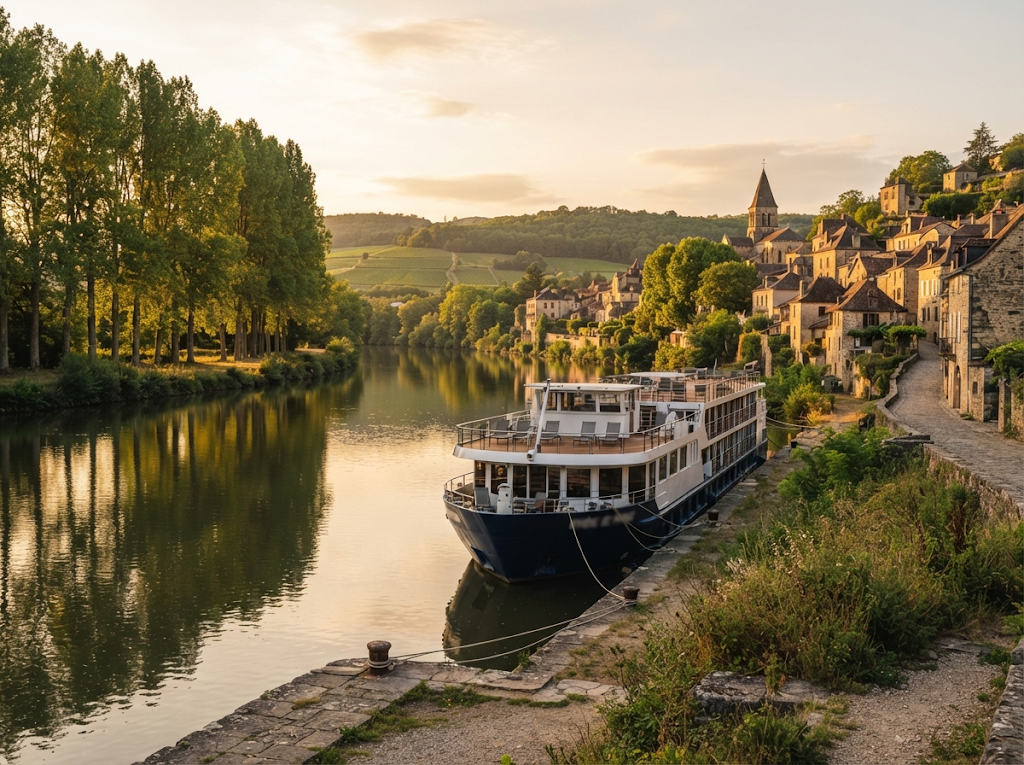
There is no gentler way to see France than from the deck of a river boat. The Seine unwinds through Normandy, the Rhône runs past the vineyards of Burgundy and Provence, and the Dordogne drifts under castle walls. Each year tens of thousands of guests from the United States, Britain and Australia board small cruise ships for a week of slow travel, long lunches and village markets. Their holiday begins with a booking confirmation and ends with a tip envelope, and almost everything in between is written. On a river cruise the guest spends a week in a small floating hotel, and each notice, menu and daily programme either makes the stay seamless or leaves her wondering what time the coach leaves. This guide explains how cruise operators, hotels and local guides can prepare English materials for guests.
The Guest's Week in Documents
A cruise generates many texts: the pre-trip booklet, the daily programme, excursion descriptions, menus, safety instructions, cabin information, the feedback form and the final invoice. Guests are often older, travel as couples and read everything carefully. They appreciate clarity, a warm tone and honest information about walking distances, steps and weather.
Daily Programmes That Work
The daily programme is the most read page. Put the times, meeting points and clothing advice at the top, followed by short descriptions of each activity. Give walking times and the level of difficulty. Use the same words every day, such as meeting point, gangway and coach, and avoid French terms unless you explain them once. Check that clocks and time zones are correct, especially at the start of the trip.
Excursions and Local Stories
Excursions are the core of the product. Describe the place, the guide, the duration, the pace and what is included. Add a short note on what makes it special. The French tourism board at france.fr offers material that can help check names and facts. Place names, such as Honfleur, Avignon or Tournus, should be spelled correctly, with accents, and explained when pronunciation is difficult.
Food, Wine and Menus
Dining is a highlight, and the menu is a story. Describe dishes in clear English and keep French names where they are well known. Explain regional specialities, wines and cheeses, and mention allergens and dietary options. Ask guests about dietary needs at booking, and make sure the kitchen has a clear way to pass them to waiters. A bilingual menu card helps staff and guests understand each other.
Working With a Language Partner
Operators that sell mainly in English but work in France benefit from a partner offering french translation services in both directions, so that brochures, crew manuals and supplier contracts stay consistent. Give the translator your menus, the route and the typical questions guests ask, and agree on a glossary of nautical and hospitality terms.
Safety Briefings and Regulations
Safety instructions must be understood by every guest. Explain life jackets, muster points, emergency exits and what to do in case of fire or a person overboard. Provide printed instructions in cabins and make sure crew members can repeat them in simple English. Rules for gangways, locks and decks should be presented in a friendly but firm manner. For another example of travel-related paperwork, see this article on French to English translation.
Crew, Guides and Daily Phrases
The crew is international, and the guides are local. Give each person a short card with useful English phrases for greeting guests, explaining delays, asking about allergies and handling complaints. A well trained team can solve most problems before they become reviews. Encourage guides to tell stories in a human voice, and to ask guests questions.
Mobility, Health and Accessibility
Be honest about stairs, uneven cobblestones and long walks. State which excursions are suitable for guests with limited mobility, and offer alternatives. Provide information on the nearest hospitals and pharmacies at each stop, and explain how to get help from the crew. Honest descriptions prevent disappointment and protect the operator.
Payments, Tips and Terms
Explain the final bill, the currency of onboard purchases, how to pay and the customary level of tipping. Cancellation and insurance terms should be clear before booking. Contracts with suppliers, such as coach companies and restaurants, need accurate bilingual versions, and a lawyer should check them.
Feedback and Memory
A short bilingual feedback form lets guests share what worked. Read it carefully, and use the comments to improve the next season. Send a thank-you message with a few photographs and a link to a page with the route and recipes. Guests who feel looked after write good reviews and book again.
A Calm Voyage in Two Languages
Keep a glossary, a template for each document and a list of approved phrases for staff. Review materials before every season. When the writing is as smooth as the river, guests remember the week not for what they had to ask but for the moments they did not have to.